If you’ve ever sliced into a beautiful seeded sourdough bread and thought, “I could eat this every single day,” — you’re not alone. Seeds turn a great loaf into an extraordinary one. They add crunch, nutrition, flavor, and that gorgeous rustic look that makes you want to grab your camera before your fork.
But here’s the real question: which seeds actually work best in sourdough? And what do they actually do for your body?
We researched it all. Let’s dig in.
Why Add Seeds to Sourdough Bread in the First Place?
Before we talk about which seeds, let’s talk about why seeds and sourdough are such a perfect match.
Sourdough goes through a long, slow natural fermentation process. During that time, naturally occurring acids break down phytic acid — an antinutrient found in seeds and grains that normally blocks your body from absorbing minerals like iron, zinc, and magnesium. Because sourdough fermentation reduces phytic acid significantly, your body actually absorbs the nutrients from seeds far more effectively than it would from a standard yeast bread.
Translation? Seeds are like nature’s multivitamin — filled with minerals, healthy fats, plant protein, antioxidants, and more. And in a naturally fermented sourdough loaf, all those nutrients become even more available to your body.
Beyond nutrition, seeds are highly nutritious and a strong source of fiber, vitamins, and minerals, as well as healthy fats. Some seeds are also surprisingly high in protein for their tiny size, which, added to the protein in a loaf of freshly milled flour, provides a more lasting sense of satisfaction.
That’s a big win in every slice.
The 8 Best Seeds for Sourdough Bread
1. Sesame Seeds — The All-Time Classic
Ask any seasoned bread baker what seed they reach for first, and most will say sesame. It’s the most popular seed in sourdough bread with seeds — and for good reason.
Flavor & Texture: Toasted sesame seeds bring a warm, nutty depth that pairs perfectly with sourdough’s natural tang. Toasting the sesame seeds draws their natural oils to the surface, intensifying their rich nutty essence that infuses the bread.
Health Benefits:
- Outstanding source of calcium — one of the best plant-based options out there
- High in copper, which supports bone strength and iron absorption
- Packed with antioxidants like sesamin that fight inflammation
- Provides plant-based protein and B vitamins
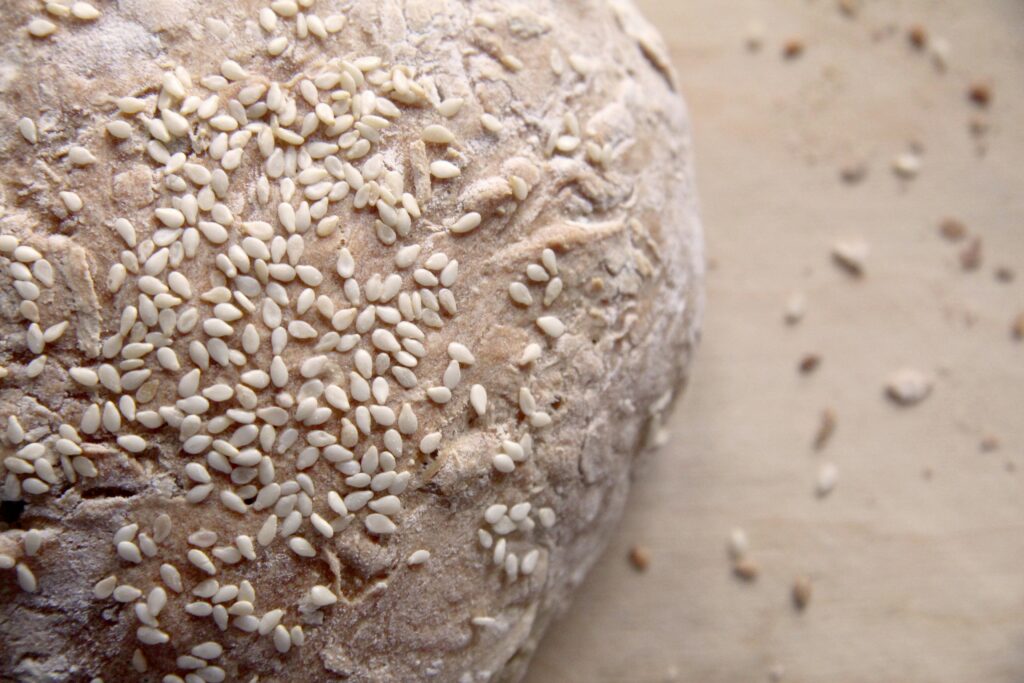
Sesame seeds work beautifully both inside the dough and pressed onto the crust. They give any seeded sourdough bread that signature artisan bakery look.
2. Flax Seeds — The Omega-3 Champion
If you’re looking for the single most nutritious seed to bake into your flax seed sourdough bread, flax wins the health contest.
Flavor & Texture: Mild, nutty, and earthy — flaxseeds blend right into the dough without overpowering the flavor. Use whole seeds for crunch or ground seeds for a denser crumb. Flaxseeds are helpful for improving digestive health due to their high fiber content.
Health Benefits:
- One of the richest plant-based sources of Omega-3 fatty acids (ALA) — critical for brain and heart health
- High in lignans, powerful antioxidant plant compounds
- Loaded with dietary fiber that feeds your gut bacteria
- May help lower LDL (bad) cholesterol and blood pressure
- Supports blood sugar regulation
Baker’s Tip: Soak your flaxseeds for a few hours before adding them to the dough. This helps them absorb moisture and prevents your loaf from drying out during baking — a tip every serious home baker should know.
3. Pumpkin Seeds — The Mineral Powerhouse
Large, green, and satisfyingly crunchy, pumpkin seeds (also called pepitas) are one of the most nutrient-dense seeds you can add to your pumpkin seed sourdough bread.
Flavor & Texture: Buttery, mildly sweet, and firm. They hold their shape beautifully during baking and create a great textural contrast against the chewy sourdough crumb. Pumpkin seeds are an excellent source of phosphorus, magnesium, and iron.
Health Benefits:
- Exceptionally high in magnesium — essential for sleep, stress management, and muscle function
- Rich in zinc for immunity, skin health, and wound healing
- Contain tryptophan, which converts to serotonin and supports mood and sleep
- High in antioxidants and anti-inflammatory compounds
Scattered across the top of a loaf before baking, pumpkin seeds create a stunning rustic visual that signals quality and craft from the very first glance.
4. Sunflower Seeds — The Everyday Essential
Sourdough bread with sunflower seeds is a beloved classic across American kitchens — and for good reason.
Flavor & Texture: Mild, slightly sweet, and pleasantly nutty. Sunflower seeds stay soft enough inside the loaf to create a gentle, satisfying chew. Sunflower seeds are rich in healthy fats, vitamins, and minerals.
Health Benefits:
- Outstanding source of Vitamin E — one of the body’s most powerful fat-soluble antioxidants
- High in selenium, which supports thyroid function and immune health
- Rich in B vitamins (especially B6) that support brain function and mood
- Contain phytosterols — plant compounds that help lower cholesterol
Sunflower seeds pair especially well with whole wheat and multigrain sourdough blends, adding nuttiness and nutrition to every slice.
5. Chia Seeds — The Modern Superfood
Chia seed sourdough bread has taken the artisan bread world by storm — and for very good reasons.
Flavor & Texture: Virtually flavorless on their own, which makes chia the most versatile seed on this list. Chia seeds added to your dough might benefit from a presoak, as they do absorb lots of liquid. When soaked, they form a gel that adds moisture and keeps the crumb soft. When used dry, they create a subtle crunch.
Health Benefits:
- Gram for gram, one of the highest fiber foods on the planet
- Chia seeds are high in omega-3 fatty acids and fiber
- Rich in calcium, phosphorus, and magnesium for bone health
- Absorb up to 10x their weight in water, helping sourdough stay moist and fresh longer
- High in antioxidants that fight free radical damage
6. Fennel Seeds — The Underrated Gem
Not enough bakers talk about fennel seed sourdough bread — and that needs to change.
Flavor & Texture: Fennel seeds bring a bright, slightly sweet, anise-like flavor that plays beautifully against sourdough’s natural tang. They’re small, so they distribute evenly through the dough without creating any structural issues. Fennel is one baker’s favorite seed of them all; the bright, zesty flavor seems to go well with most things made in the kitchen.
Health Benefits:
- Traditionally used to support digestive health and reduce bloating
- Contains anethole, a powerful anti-inflammatory compound
- Good source of fiber, potassium, and manganese
- Rich in antioxidants including quercetin and kaempferol
Pair fennel seeds with black sesame and flax for a beautiful, flavor-balanced crust on your next loaf — one of the most celebrated seed combinations in artisan sourdough.
7. Poppy Seeds — The Timeless Classic
Poppy seed sourdough bread has earned its place in baking traditions from Eastern Europe to Jewish bakeries across New York City — and it belongs in your kitchen too.
Flavor & Texture: Mildly sweet with a gentle, satisfying crunch. Poppy seeds have a mild, nutty flavor that adds subtle depth and richness to breads, muffins, cakes, and rolls, and provide a light crunch that enhances the mouthfeel.
Health Benefits:
- Poppy seeds are very high in calcium and manganese
- Rich in linoleic acid, an essential fatty acid for heart health
- Good source of dietary fiber and plant-based iron
- Contain natural plant compounds that may support pain relief and restful sleep
The Showstopper Version: Try lemon poppy seed sourdough bread — a combination that’s become wildly popular across the US. The tangy flavor of the sourdough meshes perfectly with the tart flavor of lemon, and poppy seeds are rich in nutrients, including healthy fats, fiber, and essential minerals. The result is bright, citrusy, soft, and absolutely beautiful to look at. It works perfectly as morning toast with butter or as a weekend brunch showpiece.
8. Hemp Seeds — The Protein Star
Hemp seeds are one of the most nutritionally complete foods on the planet, and they make a wonderful addition to any multi seed sourdough bread.
Flavor & Texture: Mild, slightly nutty, and buttery in flavor. Hemp seeds (also called hemp hearts) are soft, so they blend right into the crumb without adding much crunch. They’re small enough to be nearly invisible in the dough, yet big in nutrition.
Health Benefits:
- One of the few plant foods that provides all nine essential amino acids — making it a complete protein
- Rich in Omega-3 and Omega-6 fatty acids in an ideal ratio
- Contains GLA (gamma-linolenic acid), which supports hormonal balance
- Good source of magnesium, phosphorus, and zinc
- May help reduce inflammation and support heart health
Exciting Seed Combinations to Try
The real magic of sourdough bread seeds happens when you start combining them. Here are some crowd-winning combinations:
The Classic Mix — Sesame + sunflower + pumpkin + flax. This is your everyday multi seed sourdough bread that pairs with everything from avocado to peanut butter.
The Artisan Showstopper — Black sesame + fennel + flax seeds rolled across the outside crust. Some seeds really work well together to play off of each other’s flavors, working in concert to give rise to an overall sense of good taste.
The Lemon Poppy Dream — Lemon zest + poppy seeds baked into a soft, fragrant loaf — one of the most popular sourdough flavor combinations in American home baking right now.
The Cranberry Pumpkin Seed Sourdough — Dried cranberries paired with pumpkin seeds create a sweet-savory contrast that works beautifully in a whole wheat sourdough base. The chewy cranberries complement the crunchy pepitas in a way that makes every slice feel special — perfect for fall baking or holiday gifting.
The Superfood Trio — Chia + hemp + flax. All three are considered superfoods, and all three disappear into the dough while delivering maximum nutrition. This combination is naturally leavened, nutritionally dense, and packed with flavor.
The Multigrain Seeded Sourdough — Combine whole wheat flour with rolled oats and a blend of sesame, sunflower, pumpkin, chia, and hemp seeds for a hearty loaf that checks every nutritional box. This is the best seeded sourdough bread for anyone who wants great taste and serious health benefits in every slice.
How Many Calories Are in Seeded Sourdough Bread?
One of the most common questions people ask is about the calories in seeded sourdough bread. Here’s the honest breakdown:
A standard slice of plain sourdough runs around 145–174 calories. A slice of seeded sourdough may have 50–80 more calories than plain sourdough due to added fats and protein from the seeds — so you’re typically looking at 190–250 calories per slice depending on how seed-heavy the loaf is.
But here’s the thing — those extra calories come from healthy fats, fiber, and protein, which means seeded sourdough keeps you fuller for longer compared to plain white bread. To see health benefits, you only need to eat 1/4 cup of seeds or 2 tablespoons of seed butter each day. In a seeded loaf, you get a meaningful dose of that seed nutrition in every slice without going overboard.
The lower glycemic index of sourdough — around 48 compared to white bread’s 70+ — means your blood sugar stays more stable too. That’s a win for sustained energy and appetite control.
How to Add Seeds to Your Sourdough: 3 Methods
1. Fold into the dough — Add seeds during your stretch and fold sessions so they distribute evenly through the crumb. Best for flaxseeds, chia, hemp, and sunflower seeds.
2. Press onto the crust — Dampen the surface of your shaped dough and roll it in a bed of seeds before proofing. Best for sesame, poppy, fennel, and pumpkin seeds. This gives you that beautiful seeded crust that cracks satisfyingly when you slice.
3. Use a seed soaker — A seed soaker made up of seeds soaked in hot water helps seeds absorb moisture and prevents them from drawing liquid away from the dough during baking. This works especially well for larger seeds like pumpkin, sunflower, and whole flaxseeds.
Pro Tip: Toast your seeds before adding them to the dough. Toasting draws natural oils to the surface of seeds, intensifying their rich nutty essence that infuses the bread. It’s an extra five minutes that makes a huge difference in flavor.
Quick Seed-to-Sourdough Pairing Guide
| Seed | Best For | Placement |
|---|---|---|
| Sesame | Everyday loaves, bagels | Inside + crust |
| Flaxseed | Whole wheat loaves | Inside (soaked) |
| Pumpkin | Hearty multigrain loaves | Top crust |
| Sunflower | Sandwich loaves | Inside + crust |
| Chia | Light, moist crumb | Inside (soaked) |
| Fennel | Artisan/flavored loaves | Inside + crust |
| Poppy | Classic loaves, lemon loaves | Inside + crust |
| Hemp | High-protein loaves | Inside |
Final Thoughts — The Seed Sourdough You Deserve
There’s no wrong answer when it comes to seeds for sourdough bread. Whether you go with the comforting classic of sesame sourdough, the bright spring flavor of lemon poppy seed sourdough, the earthy depth of a cranberry pumpkin seed sourdough, or the full-throttle nutrition of a multigrain seeded sourdough bread — every seed brings something special to the table.
The key is to start with one or two seeds, learn how they affect the dough, and then experiment from there. That’s how the best seeded sourdough bread gets made — not from a strict formula, but from curiosity and a little bit of patience.
So go ahead. Grab your starter, pick your seeds, and build the most delicious, nutritious loaf of your life.
Your morning toast just got a serious upgrade.
Frequently Asked Questions (FAQs)
The best seeds for sourdough bread are sesame, flax, sunflower, pumpkin, chia, poppy, fennel, and hemp seeds. Each one brings its own unique flavor, texture, and nutritional benefits. If you’re just starting out, sesame and sunflower seeds are the easiest to work with and the most universally loved. If you want maximum nutrition in one loaf, go with a multi seed sourdough bread blend of chia, flax, and hemp.
You can add seeds at two different stages. Mix softer seeds like chia, hemp, flax, and sunflower directly into the dough during the stretch and fold phase. Press firmer seeds like sesame, pumpkin, and poppy onto the outside crust right before the loaf goes into the oven. Some bakers also prefer to add seeds during the lamination stage of sourdough baking — spreading them on the dough and folding it in layers for even distribution.
For larger, thicker seeds like flax, pumpkin, and sunflower — yes, soaking is highly recommended. A seed soaker (seeds soaked in hot water for a few hours or overnight) softens the seeds and prevents them from pulling moisture away from your dough during baking. This keeps your loaf hydrated and gives it a better crumb. Smaller seeds like poppy, sesame, and fennel don’t need soaking and can go straight into or onto the dough.
A standard slice of plain sourdough contains around 145–174 calories. A slice of seeded sourdough bread typically contains between 190–250 calories depending on how many seeds are used and what types. The extra calories come from healthy fats, protein, and fiber in the seeds — which actually helps you feel fuller for longer and makes seeded sourdough a smarter, more satisfying choice than regular white bread.
Yes — seeded sourdough bread is more nutritious than plain sourdough. Seeds add healthy fats (including Omega-3s), additional fiber, plant-based protein, and a wide range of vitamins and minerals like magnesium, zinc, calcium, and Vitamin E. The naturally fermented sourdough base also reduces phytic acid, which means your body absorbs those seed nutrients far more efficiently. It’s one of the most nutrient-dense breads you can eat.
The most popular and well-balanced combination for multigrain seeded sourdough bread is sesame + sunflower + pumpkin + flax + chia. Together, they cover all the nutritional bases — Omega-3s (flax and chia), magnesium (pumpkin), Vitamin E (sunflower), and calcium (sesame). This mix also creates a beautiful contrast of textures — crunchy, chewy, and soft — that makes every bite interesting.
Absolutely! Lemon poppy seed sourdough bread is one of the most popular flavored sourdough recipes in home baking right now. You simply add fresh lemon zest and poppy seeds to your sourdough dough during the mixing stage. The natural tang of the sourdough plays beautifully against the bright citrus flavor of lemon, and the poppy seeds add a gentle crunch and mild nuttiness. It makes a stunning loaf for weekend brunches or gifting.
Cranberry pumpkin seed sourdough bread is a sweet-savory flavored sourdough loaf made by folding dried cranberries and pumpkin seeds (pepitas) into the dough. The chewy tartness of cranberries and the buttery crunch of pumpkin seeds create a contrast that works incredibly well in a whole wheat sourdough base. It’s especially popular during fall and the holiday season in the US, and makes a beautiful, flavorful gift loaf.
To stop seeds from burning on the crust, lightly mist the outside of your shaped dough with water before pressing seeds onto the surface — this helps them stick without scorching. You can also bake your loaf covered (in a Dutch oven) for the first 20 minutes, which creates a steamy environment that protects the seeds. Once you remove the lid for the final bake, the seeds toast beautifully without burning. Soaking seeds like pumpkin and sunflower before using them on the crust also helps prevent over-browning.
Fennel seeds do have a mild, anise-like flavor — but in sourdough bread, that flavor is surprisingly subtle and pleasant rather than overpowering. The natural tang of the sourdough balances out the sweetness of fennel perfectly. Most people who try fennel seed sourdough bread for the first time are surprised by how much they enjoy it. It pairs especially well with savory toppings like cheese, olive oil, or smoked salmon.
Chia seed sourdough bread can absolutely support a healthy weight management plan. Chia seeds are one of the highest fiber foods on the planet, and fiber keeps you full and satisfied for hours. Combined with the lower glycemic index of naturally fermented sourdough (around 48 vs white bread’s 70+), chia seed sourdough bread causes a slower, steadier rise in blood sugar — meaning fewer energy crashes and fewer cravings throughout the day. It’s a smart, satisfying bread choice for anyone focused on their health.
Store your seeded sourdough bread at room temperature in a bread bag, linen bread bag, or wrapped in a clean kitchen towel for up to 2–3 days. Avoid plastic bags, which trap moisture and soften the crust. For longer storage, slice the loaf and freeze it — then toast individual slices straight from the freezer whenever you need them. The seeds actually help sourdough stay moist and fresh longer, especially chia seeds, which retain moisture in the crumb naturally.